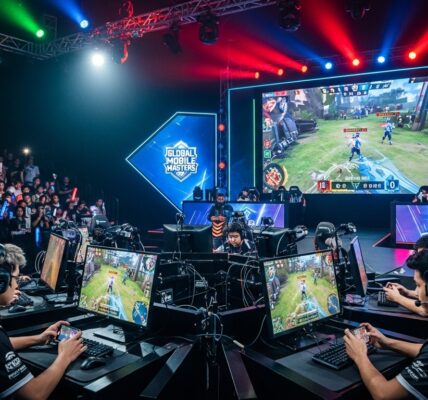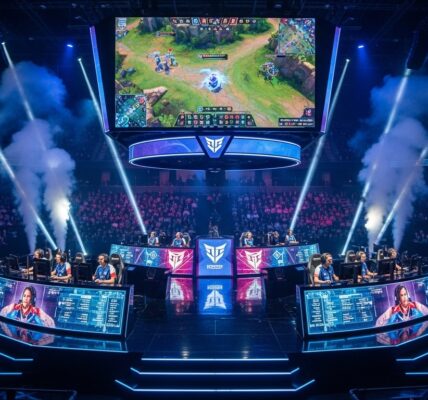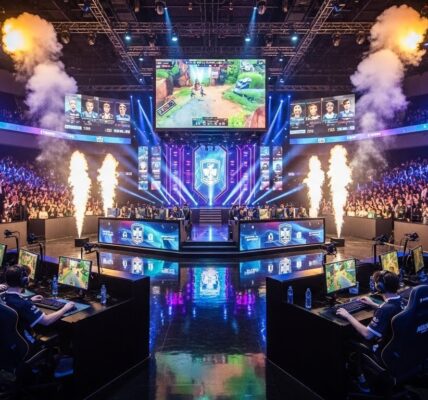
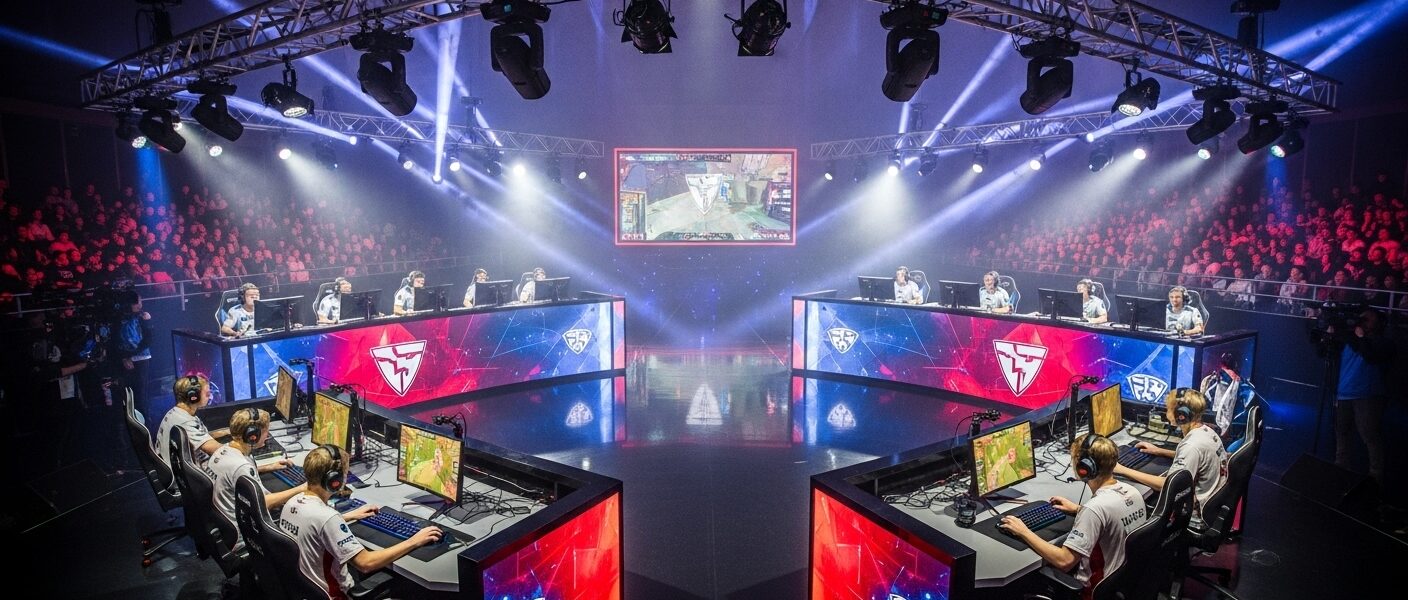

Esports has transformed the way we perceive gaming, elevating it from a hobby to a professional, competitive, and globally recognized sport. What started as informal competitions in arcades and early computer networks has grown into an organized industry with professional leagues, celebrity players, massive tournaments, and millions of spectators worldwide. Today, esports is not just about playing games; it is about strategy, skill, teamwork, and entertainment, with its influence reaching education, culture, and technology.
In this blog, we will explore the history, evolution, professional structure, economic significance, and cultural impact of esports. We will also examine its challenges and future potential, providing a comprehensive overview of this rapidly expanding digital phenomenon.
The Early Beginnings of Esports
The origins of esports trace back to the late 1970s and early 1980s when video games gained popularity in arcades and home consoles. Early competitions focused on achieving high scores in games such as Pac-Man, Space Invaders, and Donkey Kong. These tournaments were often localized events, but they revealed the potential of competitive gaming as a spectator activity.
The first major organized competition, the Space Invaders Championship in 1980, drew thousands of participants across the United States, showcasing the mass appeal of competitive gaming. The introduction of home consoles like the Atari 2600 allowed players to compete and practice at home, setting the stage for broader engagement and professionalization.
Growth of Multiplayer and Networked Gaming
The 1990s brought significant advancements with multiplayer and networked games, creating a foundation for modern esports. Titles such as Doom, Quake, StarCraft, and Warcraft III introduced real-time competition and strategic gameplay. Players could compete online, forming communities and clans, and developing rivalries that extended beyond local settings.
South Korea played a pioneering role in the professionalization of esports during this era. StarCraft competitions became a national phenomenon, with professional players gaining celebrity status and PC bangs serving as training centers. Televised esports events in South Korea popularized competitive gaming and created a blueprint for global leagues and professional circuits.
Emergence of Professional Esports
By the early 2000s, esports had developed into a professional industry. Players began receiving salaries, joining organized teams, and participating in structured tournaments. Popular titles included Counter-Strike, DotA, Halo, and World of Warcraft, which attracted international audiences and provided substantial prize pools.
Esports organizations formalized training regimens, coaching, and analysis, treating players as professional athletes. Sponsorship deals, brand partnerships, and media coverage created a financial ecosystem that made competitive gaming sustainable as a career. Players trained for hours each day, focusing on mechanics, strategy, teamwork, and mental conditioning.
Global Expansion and Popularity
Esports has grown into a global phenomenon, reaching millions of fans across continents. Major tournaments such as The International for Dota 2 and the League of Legends World Championship offer prize pools exceeding millions of dollars, rivaling traditional sports events.
The audience for esports is diverse and highly engaged. Streaming platforms like Twitch and YouTube Gaming allow fans to watch live matches, interact with commentators, and follow the careers of professional players. This accessibility has helped esports transcend geographic boundaries, creating a global community of players, fans, and content creators.
Competitive Structure and Team Dynamics
Esports competitions mirror traditional sports in structure. Teams consist of players with specialized roles, supported by coaches, analysts, and management staff. Regular practice, strategy sessions, and mental conditioning ensure players maintain peak performance.
Tournaments are organized with a tiered system, including qualifiers, regional leagues, and international championships. This structure ensures fairness, promotes skill development, and encourages long-term engagement. Players are evaluated not just on individual performance but also on teamwork, coordination, and strategic decision-making.
Role of Streaming in Esports
Streaming has been instrumental in the rise of esports. Platforms like Twitch allow fans to watch live matches, interact with players, and participate in a shared viewing experience. Streamers have become influential figures, shaping trends, providing commentary, and building personal brands.
Revenue from streaming comes from subscriptions, donations, and advertising. The interactive nature of streaming fosters community engagement, making esports more than a passive entertainment experience. Fans feel connected to players, teams, and tournaments, enhancing loyalty and global reach.
Economic Impact of Esports
The esports industry is a multi-billion-dollar market with diverse revenue streams, including sponsorships, media rights, ticket sales, merchandise, and digital content. Corporations invest heavily in esports to reach younger, tech-savvy audiences.
Esports organizations operate like traditional sports franchises, managing team branding, content creation, marketing, and fan engagement. The industry supports a wide range of careers beyond players, including coaching, broadcasting, event management, and software development. The economic influence of esports extends to technology, media, and entertainment sectors globally.
Training and Discipline in Esports
Professional esports requires rigorous training and discipline. Players dedicate hours daily to improving mechanics, learning strategies, and studying opponents. Reflexes, decision-making, and situational awareness are critical to success.
Support teams, including coaches, analysts, nutritionists, and psychologists, help maintain player well-being and performance. Structured practice schedules, physical conditioning, and mental health support prevent burnout and optimize gameplay. Esports athletes face pressures similar to traditional sports professionals, highlighting the dedication required for competitive success.
Technological Innovations in Esports
Technology underpins every aspect of esports. High-performance gaming systems, low-latency internet, and precision peripherals ensure competitive fairness. Advanced data analytics and AI tools help teams analyze performance, predict trends, and develop strategies.
Virtual reality and augmented reality are emerging technologies with the potential to transform esports. VR tournaments could allow players and spectators to experience games immersively, while AR may integrate real-world and digital experiences in competitive play. Continuous innovation ensures esports remains a cutting-edge form of entertainment.
Esports and Education
Esports has increasingly found a place in education. Schools and universities now offer esports programs, competitive leagues, and scholarships. Collegiate esports teams provide students with opportunities to develop leadership, teamwork, and strategic thinking skills.
Educational institutions use esports to foster community, encourage digital literacy, and prepare students for professional opportunities in gaming, technology, and media industries. The integration of esports into education demonstrates its legitimacy as a structured and skill-based activity.
Cultural Influence of Esports
Esports has shaped modern culture in multiple ways. Professional players have become celebrities, influencing social media trends, fashion, and youth culture. Fans engage through content creation, live events, and community forums, creating a vibrant digital culture around competitive gaming.
The global reach of esports fosters cross-cultural interaction. Players from different countries compete together, and fans from diverse backgrounds participate in a shared experience. Esports has become a cultural bridge, connecting people and communities worldwide through competition, entertainment, and collaboration.
Challenges Facing Esports
Despite its growth, esports faces challenges such as player burnout, mental health concerns, and high-pressure environments. Long practice hours, public scrutiny, and competitive stress can affect performance and well-being. Organizations address these issues with structured schedules, mental health support, and wellness initiatives.
Maintaining competitive integrity is also critical. Anti-cheat measures, fair play policies, and regulation are necessary to preserve trust in the industry. As esports grows, balancing growth, professionalism, and ethical standards will remain an ongoing challenge.
The Future of Esports
The future of esports is promising and transformative. Emerging technologies like VR, AR, and AI will redefine gameplay, competition, and spectator experiences. Mobile esports will expand participation, allowing wider access across demographics and regions.
Esports is expected to merge further with traditional sports, media, and entertainment, creating hybrid experiences that blend physical and digital competition. Global tournaments will continue to grow in scale, prize money, and production quality, solidifying esports as a mainstream form of entertainment.
The integration of artificial intelligence, data analytics, and immersive technologies will enhance performance, strategy, and viewer engagement. Esports is poised to evolve as a sophisticated, professional, and culturally influential phenomenon for years to come.
Conclusion
Esports has evolved from informal arcade competitions to a global industry with professional players, massive tournaments, and millions of engaged fans. It combines skill, strategy, teamwork, and entertainment in ways that rival traditional sports. Beyond gameplay, esports impacts culture, technology, education, and the economy, reflecting its broad significance in modern society.
The industry’s future is bright, with technological innovation, global expansion, and professionalization driving growth. Esports is not just about playing games; it is about competition, creativity, community, and opportunity. As it continues to evolve, esports will remain a central part of the entertainment landscape, connecting players and fans worldwide while shaping the future of digital competition.