

Introduction
In recent years, the world of esports has expanded beyond the realm of niche gaming communities and transformed into a global phenomenon. Competitive gaming, once a hobbyist pastime, has evolved into a professional industry, attracting millions of fans, players, and sponsors worldwide. With a mix of strategy, skill, and entertainment, esports now rivals traditional sports in terms of viewership, revenue, and cultural impact. But how did we get here? What are the key factors driving esports’ meteoric rise? In this post, we will explore the fascinating world of esports—its history, growth, challenges, and future prospects.
The Origins of Esports: From Casual Gaming to Professional Competition
The roots of esports can be traced back to the early days of video gaming, when players would gather in arcades or living rooms to challenge one another. While competitive gaming existed in a rudimentary form, it was not until the late 1990s and early 2000s that the esports scene began to take shape. The introduction of multiplayer online games such as Quake, StarCraft, and Warcraft III laid the foundation for organized competitions. These games allowed players from around the world to connect and compete in real-time, fostering a sense of community that would prove crucial to the future of esports.
The first recognized esports tournaments began appearing in the late 1990s, but the industry’s breakthrough came with the rise of StarCraft in South Korea. By the early 2000s, StarCraft had become a national obsession, with televised tournaments and professional leagues attracting huge audiences. The success of StarCraft in South Korea demonstrated the potential for esports to become a mainstream entertainment industry, paving the way for similar developments in other regions.
The Rise of Streaming Platforms and Online Communities
One of the key drivers of esports’ success has been the advent of online streaming platforms. In the mid-2000s, sites like Twitch revolutionized how gaming content was consumed. These platforms allowed players to broadcast their gameplay live, providing an interactive experience that traditional television could not match. For the first time, fans could not only watch their favorite players compete in real-time but also engage with them directly through live chats and social media.
Twitch, in particular, became a central hub for esports fans, offering a platform where players could showcase their skills, engage with audiences, and build their brand. As a result, many professional gamers transitioned from being casual players to full-time content creators, streaming both their competitive matches and casual gaming sessions. This new avenue for interaction helped foster a sense of community within esports, where players and fans could connect on a personal level.
The rise of these streaming platforms also allowed tournaments to be broadcast to a global audience, expanding the reach of esports beyond the confines of physical arenas. Major events, such as The International (Dota 2’s premier tournament) and League of Legends World Championships, began attracting millions of viewers, with some tournaments even surpassing traditional sports events in terms of online viewership.
The Global Growth of Esports
Esports has gone from a niche activity to a global industry, with professional leagues and tournaments spanning every continent. The competitive gaming scene is now divided into numerous genres, with each attracting its own dedicated fanbase. Games like League of Legends, Dota 2, Counter-Strike: Global Offensive, and Overwatch have developed into international franchises, with professional teams and players competing in leagues, tournaments, and events throughout the year.
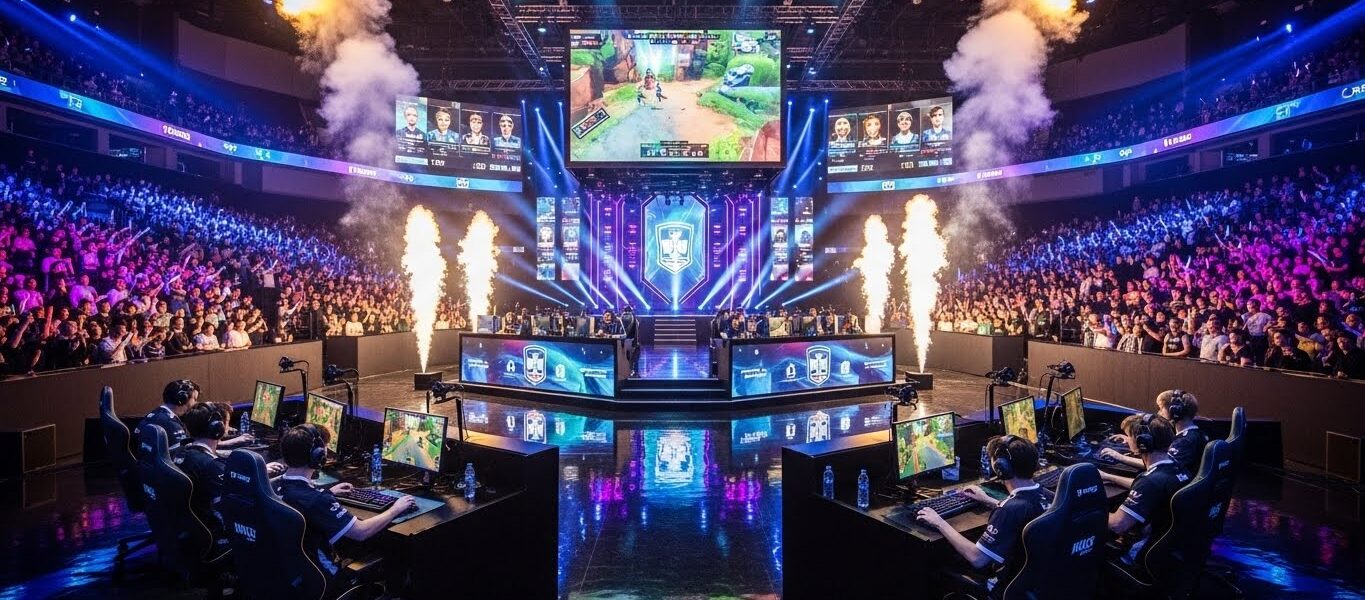
In addition to online competitions, large-scale esports tournaments are now held in stadiums and arenas around the world. These events are often broadcast to millions of viewers, with fans filling the stands to watch their favorite teams compete. Esports is no longer confined to the digital space—it has become a live entertainment spectacle that rivals traditional sports in terms of production value and fan engagement.
The growing popularity of esports has also attracted major investment from corporate sponsors. Brands across various industries, including technology, energy drinks, apparel, and even automotive companies, have recognized the potential of esports as a marketing platform. This influx of investment has helped fund professional teams, tournaments, and infrastructure, ensuring that the industry continues to grow.
The Professionalization of Esports: Teams, Players, and Coaches
As esports has grown in popularity, so too has the level of professionalism within the industry. What was once a casual hobby for gamers has now become a legitimate career for many. Professional esports players train like athletes, honing their skills through hours of practice and analysis. They work with coaches, strategists, and analysts to develop game plans and improve their performance.
Esports organizations now resemble traditional sports franchises, with dedicated management teams overseeing player contracts, sponsorship deals, and branding efforts. Teams often have large staffs, including coaches, analysts, psychologists, and social media managers, to support players both on and off the battlefield. In many ways, the structure of esports organizations mirrors that of professional sports leagues, with an emphasis on teamwork, discipline, and continuous improvement.
The rise of esports has also led to the emergence of new career opportunities. In addition to players, there is a growing demand for coaches, content creators, broadcasters, event organizers, and marketing professionals. Esports has created an entire ecosystem of jobs, and many individuals who may not be professional gamers still find meaningful careers within the industry.
The Economics of Esports: Sponsorships, Prize Pools, and Streaming Revenue
Esports is a multi-billion-dollar industry, and its financial ecosystem is built on several key revenue streams. Sponsorships play a significant role, with major brands investing in teams, tournaments, and individual players. These partnerships can take many forms, from jersey sponsorships to branded in-game content, and provide crucial financial backing to the esports ecosystem.
Another major revenue stream for esports is prize money. Many top-tier tournaments offer prize pools that can reach millions of dollars, with the winning teams taking home a significant portion of the money. The International (Dota 2’s flagship event) is famous for its massive prize pool, which has regularly surpassed $30 million. These huge rewards incentivize players to compete at the highest level, attracting the best talent from around the world.
Streaming revenue is also a vital component of the esports economy. Platforms like Twitch and YouTube generate substantial income through advertisements, subscriptions, and donations. Popular streamers and professional players often earn significant amounts of money by streaming their gameplay and engaging with their audiences. Some of the most successful esports personalities have turned their channels into full-time businesses, attracting sponsorships and building their personal brands.
Esports as a Mainstream Entertainment Industry
Esports has grown far beyond the confines of gaming enthusiasts and has become a mainstream form of entertainment. Major television networks and media companies are now broadcasting esports events, and traditional sports organizations are investing in esports leagues. For instance, the National Basketball Association (NBA) has launched the NBA 2K League, and soccer’s La Liga has partnered with esports organizations to promote FIFA tournaments.
The growing recognition of esports has led to discussions about whether it should be included in major international sporting events. The International Olympic Committee (IOC) has even considered adding esports to the Olympic Games, though the debate is still ongoing. Whether or not esports will ever become an official Olympic sport, it is clear that the industry’s cultural and economic influence is only growing.
The Future of Esports: Challenges and Opportunities
Despite its rapid growth, esports faces a number of challenges as it continues to evolve. One of the biggest issues is the potential for player burnout. The pressure to perform at a high level, combined with the grueling training schedules and long hours of practice, can take a toll on players’ physical and mental health. As the industry matures, organizations will need to prioritize player well-being and find ways to support them in the long term.
Another challenge is ensuring the integrity of esports competitions. As the industry grows, so too does the risk of cheating, match-fixing, and other forms of corruption. To combat these issues, esports organizations must continue to develop and enforce strict rules and regulations to maintain fairness and credibility.
Despite these challenges, the future of esports is incredibly promising. New technologies, such as virtual reality and augmented reality, may transform the way esports competitions are experienced, creating new forms of interaction and immersion. Additionally, the expansion of esports into new regions, including Africa and Southeast Asia, presents exciting opportunities for growth and development.
Conclusion
Esports has come a long way since its humble beginnings, transforming from a niche hobby into a global entertainment industry. The combination of technological advancements, passionate communities, and a growing financial ecosystem has propelled esports to the forefront of digital competition. Whether you’re a fan of competitive gaming or new to the scene, there’s no denying that esports is here to stay. As the industry continues to evolve, it will likely shape the future of entertainment and redefine what it means to be a professional athlete in the digital age.