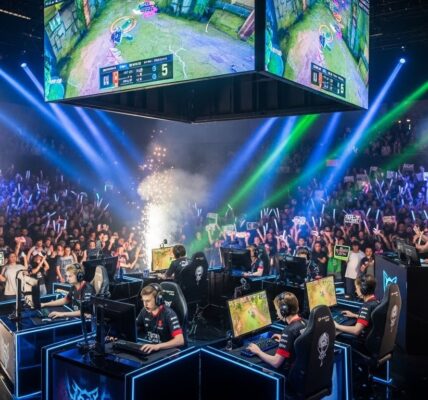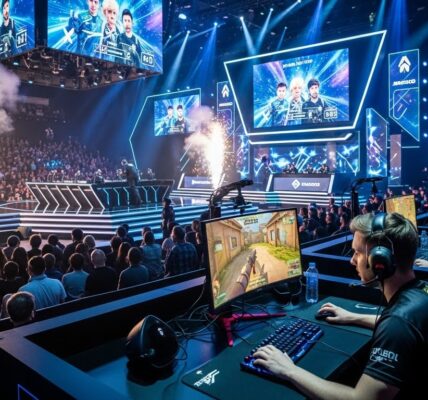
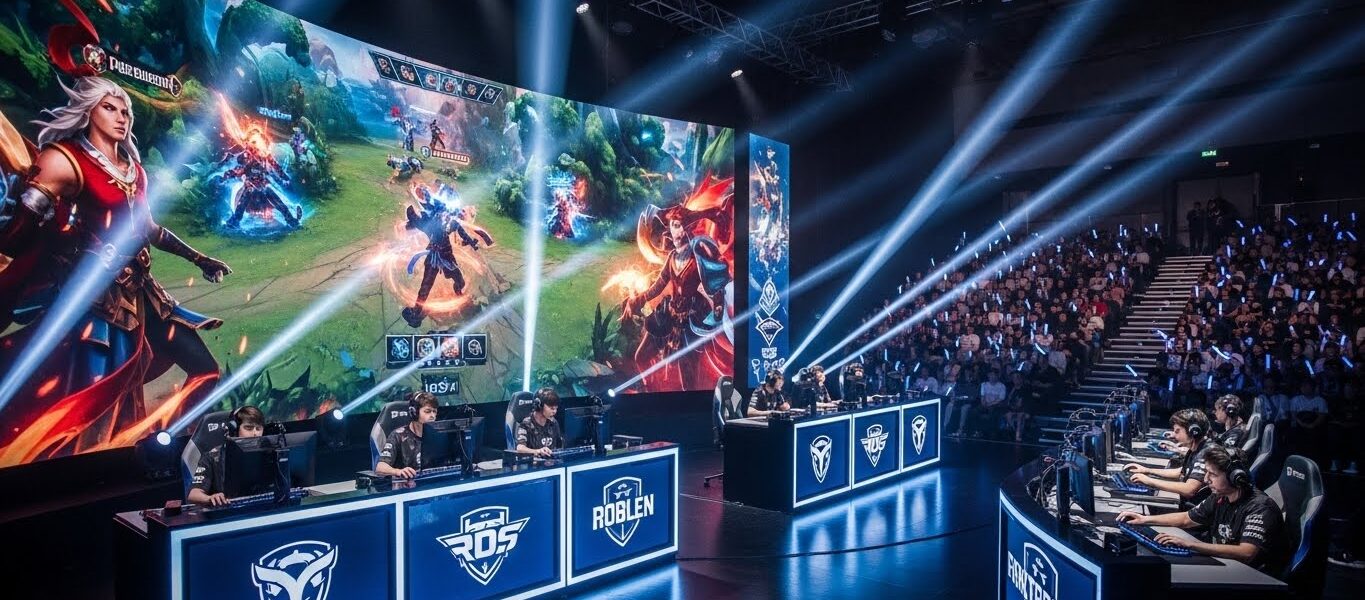

Esports, short for electronic sports, has transitioned from a niche activity enjoyed by a small group of gamers to a global entertainment phenomenon. From the early days of local LAN parties to multi-million-dollar international tournaments, esports has quickly gained mainstream popularity, attracting millions of fans and creating lucrative career opportunities for players and professionals in the gaming industry. In this blog post, we’ll explore the rapid rise of esports, its impact on the gaming community, and how it’s reshaping the world of sports and entertainment.
The Origins of Esports
Esports is not a new concept, though its mainstream presence is relatively recent. The history of competitive gaming dates back to the 1970s and 1980s, when early arcade games like Space Invaders and Pong began to spark interest in organized competitions. However, it wasn’t until the 1990s that esports as we know it today began to take shape.
In the 1990s, LAN (Local Area Network) parties became a popular way for gamers to connect their computers and compete against each other in games like Doom and Warcraft. These early gatherings were small, informal affairs, but they laid the groundwork for the global phenomenon that esports would become.
The turning point for esports came in 1997 with the launch of the first major esports tournament, the Red Annihilation tournament for Quake. The event attracted hundreds of players from around the world and was broadcasted on television. This marked the first step toward making esports a more visible and structured activity.
Esports in the 2000s: The Formation of a Community
As internet speeds improved and gaming technology evolved in the early 2000s, esports began to grow rapidly. The introduction of online gaming made it easier for players to compete against each other from different parts of the world, and tournaments began to take on a more professional nature.
One of the most significant developments in this era was the rise of StarCraft as a competitive title. The StarCraft series became a massive phenomenon in South Korea, where esports began to be treated as a legitimate sport. Korean broadcasters began to air StarCraft tournaments, and the government even recognized esports as a legitimate form of professional sport. This was a major turning point, as South Korea would go on to become the esports capital of the world, influencing the global esports landscape for years to come.
By the mid-2000s, esports had expanded beyond StarCraft, with games like Counter-Strike, Warcraft III, and Dota creating competitive communities. Major gaming organizations, including ESL (Electronic Sports League) and MLG (Major League Gaming), began hosting large-scale tournaments with significant prize pools. These events helped foster a sense of community and established esports as an industry with a global fanbase.
The Esports Boom: 2010s and Beyond
The 2010s marked the true explosion of esports into the mainstream. As gaming technology continued to improve, new titles and platforms began to emerge, each contributing to the growth of competitive gaming.
One of the biggest catalysts for the growth of esports was the rise of League of Legends (LoL). Released by Riot Games in 2009, LoL quickly became one of the most popular multiplayer online battle arena (MOBA) games in the world. Its esports scene took off in the early 2010s, with the introduction of the League of Legends World Championship, which quickly became one of the most-watched esports events in history. The success of LoL demonstrated that esports could draw in millions of viewers and rival traditional sports in terms of viewership.
During the same period, Dota 2 and Counter-Strike: Global Offensive (CS:GO) also helped further solidify esports as a legitimate form of entertainment. Dota 2, in particular, introduced the world to the concept of crowdfunding for esports tournaments with its The International tournament, which consistently broke records for the largest prize pools in esports history.
Another important development in the 2010s was the growing involvement of major corporations, including traditional sports teams, in esports. Companies like Coca-Cola, Intel, and Red Bull began sponsoring tournaments, teams, and individual players, bringing an unprecedented level of mainstream recognition to esports. Traditional sports franchises, such as the NBA’s Golden State Warriors and the NFL’s Dallas Cowboys, also entered the esports market, forming their own teams and investing in the industry.
Streaming platforms like Twitch and YouTube played a pivotal role in expanding the visibility of esports. These platforms allowed fans to watch their favorite players and teams in real time, while also providing a way for gamers to build personal brands and create content. The advent of live streaming made it easier for esports to reach a global audience, and the interaction between streamers and their fans helped build a unique, engaged community.
The Structure of Modern Esports
Today, esports is a highly organized and multi-faceted industry. Professional esports teams compete in various tournaments across a wide range of genres, including first-person shooters (FPS), MOBAs, real-time strategy (RTS), and battle royales. Games like Fortnite, Valorant, Overwatch, and Call of Duty have carved out their own esports ecosystems, while older titles like CS:GO and Dota 2 continue to maintain a strong following.
Esports tournaments are often structured as leagues or cup-style events. Some of the most prominent leagues include the Overwatch League, League of Legends Championship Series (LCS), and Call of Duty League. These leagues operate on a seasonal basis, with teams competing in regular matches leading up to playoffs and finals. Teams in these leagues are typically sponsored by major brands, and players can earn significant salaries through their team contracts, tournament winnings, and sponsorship deals.
In addition to traditional esports leagues, there are also major international tournaments, such as The International (for Dota 2) and the CS:GO Major Championships. These events attract the best players from around the world and offer prize pools that can reach tens of millions of dollars.
The growth of esports has also led to the development of support industries, including game developers, tournament organizers, team management companies, and even esports betting platforms. These sectors have created a vibrant ecosystem that sustains both professional players and fans alike.
The Cultural Impact of Esports
Esports has not only transformed the gaming industry but has also influenced global culture in profound ways. The rise of esports has created a new wave of fandom, with millions of people tuning in to watch tournaments, follow players on social media, and participate in online communities.
Esports has given rise to a new generation of celebrities, with top players like Faker (Lee Sang-hyeok), s1mple (Oleksandr Kostyliev), and Shroud becoming household names in the gaming world. These players are not only recognized for their skills but also for their personal brands, social media presence, and charitable efforts.
The popularity of esports has also paved the way for other forms of gaming entertainment, such as content creation on platforms like Twitch and YouTube. Streamers like Ninja, PewDiePie, and Pokimane have become mainstream figures, attracting millions of followers and contributing to the growing acceptance of gaming as a legitimate form of entertainment.
Furthermore, esports has brought attention to the mental and physical demands placed on players. Professional gamers must undergo rigorous training to maintain their skills, often spending hours each day practicing and analyzing their gameplay. As a result, the concept of esports athletes has become more widely accepted, with players now receiving coaching, performance analysis, and even physical therapy to enhance their gameplay and overall well-being.
The Future of Esports
The future of esports looks incredibly promising. With technological advancements like virtual reality (VR) and augmented reality (AR) becoming more prevalent, the esports experience could be transformed, allowing for even more immersive and interactive forms of competition. Additionally, as more traditional sports organizations and media companies continue to invest in esports, we can expect to see even greater crossovers between esports and mainstream entertainment.
In the coming years, we may also see more universities and colleges offering esports scholarships and degree programs, further legitimizing esports as a career path. High school and youth leagues are also growing, which will only increase the talent pool for future generations of professional players.
The rise of mobile esports is another area to watch. Games like PUBG Mobile and Mobile Legends have gained immense popularity in regions like Southeast Asia and India. As mobile gaming continues to improve in terms of graphics and performance, mobile esports could become a dominant force in the global esports scene.
Conclusion
Esports has come a long way since its humble beginnings in the 1970s. Today, it stands as one of the most exciting and fast-growing sectors in the entertainment industry. With millions of fans worldwide, a thriving ecosystem of players, teams, and sponsors, and ever-increasing technological advancements, the future of esports looks incredibly bright. Whether you’re a gamer, a fan, or someone looking to break into the industry, esports is undoubtedly a space worth exploring. The world of competitive gaming is not just about playing games—it’s about building communities, pushing boundaries, and creating unforgettable experiences for players and fans alike.