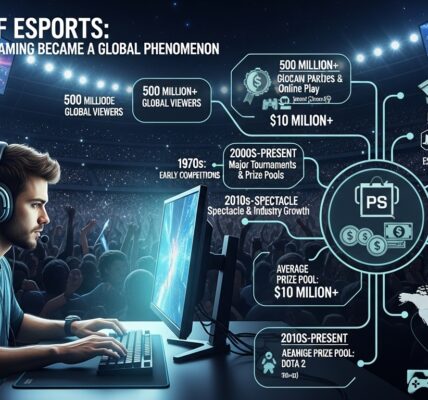


Esports, once a niche hobby for a select group of gamers, has grown into a global industry worth billions. The rapid rise of competitive gaming, fueled by advancements in technology, the internet, and a passionate community, has transformed esports into a mainstream entertainment sector. In this blog post, we will explore the history, evolution, and current state of esports, examining its cultural impact, the role of technology, and the challenges and opportunities it faces moving forward.
The Humble Beginnings of Esports
Esports has its roots in the early days of video gaming, when players began competing against each other in local tournaments. The term “esports” itself is a relatively recent one, emerging in the early 2000s, but the concept of competitive gaming dates back to the 1970s and 1980s. In fact, one of the earliest known video game competitions was held in 1972 at Stanford University, where players competed in a game called Spacewar. However, it wasn’t until the late 1990s and early 2000s that esports began to gain mainstream recognition.
The First Tournaments and Communities
In the late 1990s, online multiplayer games like Quake and StarCraft began to emerge, and players began forming communities around these titles. The first significant tournaments started appearing in the late 1990s and early 2000s, such as the Cyberathlete Professional League (CPL), founded in 1997, and the World Cyber Games (WCG), which began in 2000. These tournaments were initially small but were instrumental in laying the foundation for competitive gaming as we know it today.
During this time, players competed primarily in games like Quake, StarCraft, and Counter-Strike. These games, with their fast-paced gameplay and strategic depth, provided a perfect platform for competitive play. The online communities that formed around these games began to grow rapidly, creating a sense of camaraderie among gamers and sparking the creation of esports teams and organizations.
The Rise of Online Platforms
One of the most important factors in the growth of esports was the rise of online platforms that allowed gamers to connect with each other from around the world. The advent of high-speed internet and the proliferation of broadband connections in the late 1990s and early 2000s made it possible for players to engage in competitive gaming from the comfort of their own homes.
The Role of Streaming Services
A critical development in the rise of esports was the emergence of live-streaming platforms such as Twitch. Launched in 2011, Twitch became the primary platform for broadcasting esports events, tournaments, and casual gameplay. This shift to streaming allowed esports to reach a global audience in real-time, and it transformed competitive gaming from a niche hobby to a global phenomenon.
Twitch not only provided a space for professional gamers and teams to showcase their skills but also gave rise to a new generation of influencers and content creators. Players could now build large followings by streaming their gameplay, interacting with fans, and participating in tournaments that were broadcast to millions. The ability to monetize streams through subscriptions, donations, and sponsorships created new opportunities for both players and organizations in the esports ecosystem.
The Professionalization of Esports
As esports gained popularity, the industry began to professionalize. Esports organizations were founded, sponsorship deals were struck, and major corporations began to take notice. The landscape began to mirror traditional sports, with teams being formed, contracts being negotiated, and players earning salaries. In many ways, esports became a legitimate career path for talented players.
Major Esports Titles
While early esports tournaments were often centered around games like Quake and StarCraft, the late 2000s and early 2010s saw the rise of several major titles that would come to define the esports landscape. Games like League of Legends, Dota 2, Counter-Strike: Global Offensive, Overwatch, and Fortnite became the backbone of esports competitions, each offering unique gameplay mechanics that attracted dedicated communities and a competitive player base.
- League of Legends (LoL): Launched in 2009 by Riot Games, League of Legends quickly became one of the most popular and widely played esports titles in the world. Its strategic depth, team-based gameplay, and regular updates kept the community engaged, while the annual League of Legends World Championship became one of the most-watched esports events globally.
- Dota 2: Developed by Valve Corporation, Dota 2 is another highly influential esports title. Its largest tournament, The International, offers one of the biggest prize pools in esports, drawing millions of viewers each year. Dota 2‘s complex gameplay and emphasis on teamwork made it a mainstay in the competitive gaming scene.
- Counter-Strike: Global Offensive (CS:GO): The Counter-Strike franchise has long been a staple of competitive gaming. CS:GO, released in 2012, brought the tactical shooter into the esports limelight, with tournaments offering large cash prizes and teams competing at the highest level for global recognition.
- Overwatch: Released in 2016 by Blizzard Entertainment, Overwatch introduced a new take on the first-person shooter genre with its hero-based gameplay. The Overwatch League (OWL), launched in 2018, helped further cement the game’s place in professional esports.
- Fortnite: Released by Epic Games in 2017, Fortnite rapidly grew into one of the most popular games in the world, thanks to its innovative battle royale mode. Fortnite‘s esports scene was marked by massive prize pools, especially with its Fortnite World Cup event, which attracted a large number of players and viewers alike.
These games, along with others, have helped to shape esports into a diverse and competitive industry, offering a variety of game genres and formats for players to enjoy.
Sponsorship and Investment
As esports grew, so did the financial backing behind it. Major brands and corporations began to see the potential in sponsoring teams, tournaments, and events. Companies like Coca-Cola, Intel, Red Bull, and Audi all made significant investments in esports, contributing to its rapid growth and professionalization.
Sponsorship deals helped to fund tournaments, create more opportunities for players, and bring esports into the mainstream. Additionally, large-scale media rights deals have also become a significant source of revenue for esports leagues and organizations. Television networks, online platforms, and even traditional sports organizations began to recognize the value of esports content, leading to increased visibility and engagement.
The Cultural Impact of Esports
Esports has had a profound cultural impact, particularly among younger generations. Gaming is no longer seen as a solitary activity or a hobby for introverts; instead, it has become a social and competitive experience that brings people together from around the world. Esports tournaments are now broadcast in arenas, streamed online, and watched by millions of fans, similar to traditional sports events.
The Rise of Esports as a Spectator Sport
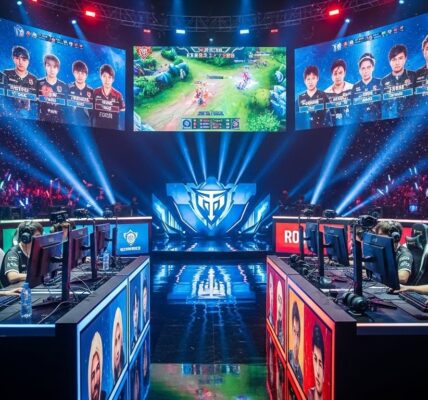
One of the most significant developments in the world of esports is the rise of it as a spectator sport. In the past, esports competitions were primarily for the players themselves, with a small group of viewers watching from the sidelines. Today, however, esports tournaments are watched by millions of fans on platforms like Twitch, YouTube, and social media. Major tournaments are held in massive arenas, and the prize pools for these events can reach into the millions of dollars.
The esports industry has successfully turned competitive gaming into a form of entertainment that attracts not just gamers, but also casual viewers and fans of traditional sports. The high-octane action, the strategies involved, and the personalities of top players and teams have created an engaging viewing experience.
Esports and Youth Culture
Esports has become a significant part of youth culture, with millions of young people participating in and following competitive gaming. For many, esports represents more than just a hobby—it is a way of life. Players look up to professional gamers as idols, and esports events become social occasions where fans can gather, share their passion, and celebrate their favorite games and teams.
The success of esports has also inspired a new wave of gaming-related content, such as streaming, esports journalism, and even documentaries. The esports community has created its own ecosystem, with influencers, commentators, and analysts contributing to the culture of competitive gaming.
The Future of Esports
Looking ahead, the future of esports is incredibly promising. The industry is expected to continue growing, with increasing investments, bigger tournaments, and more mainstream media coverage. As technology continues to improve, new opportunities for innovation in both gameplay and broadcasting will emerge.
Virtual Reality and Esports
One area that has the potential to revolutionize esports is virtual reality (VR). While VR has yet to become a mainstream technology in gaming, it is slowly gaining traction. As VR headsets become more affordable and accessible, the possibility of immersive esports experiences becomes more likely. Virtual reality could allow fans to watch esports tournaments from the perspective of the players themselves, providing a more immersive and engaging experience.
The Globalization of Esports
Esports is already a global phenomenon, but its reach will only continue to grow in the coming years. With the rise of mobile esports and the increasing accessibility of gaming devices in developing countries, the potential for esports to become a truly global sport is immense. Esports leagues and tournaments will likely continue to expand, with more countries and regions forming their own professional scenes.
Conclusion
Esports has come a long way since its early days, evolving from small-scale tournaments to a massive global industry. As the sector continues to grow, it will undoubtedly face new challenges and opportunities, but one thing is clear: esports is here to stay. From the rise of streaming platforms to the growing cultural impact of gaming, esports has firmly established itself as one of the most exciting and innovative sectors in the entertainment world. The future of esports is bright, and it will continue to captivate audiences for years to come.